 Zovda
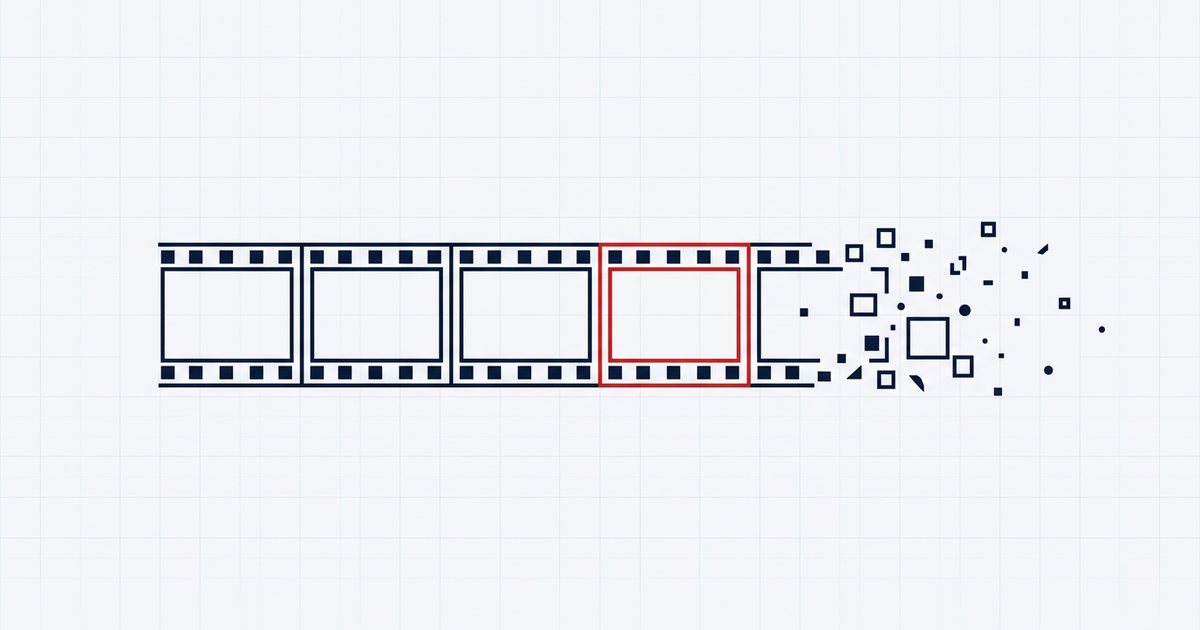
Teams usually buy video data by the hour. The invoice counts hours, the storage counts terabytes, and the training run counts something else entirely: moments that carry a label. A ten-hour drive through a warehouse can teach a model almost nothing if the interesting five seconds — the shelf pickup, the hand-off, the shift in lighting — are not marked.
That mismatch is why so much video data ends up as storage cost instead of training signal.
Hours are the wrong unit
A clip becomes training data when three things line up: it is cut at the right boundary, the boundary is described, and the description survives export. Miss any one of them and the model learns noise.
In practice that means every item carries metadata — duration, resolution, content type, collection id — and every annotation points at a time range rather than the whole file. Timestamp tables in JSONL are boring. They are also the difference between a dataset you can filter and a folder you have to review by hand.
What a usable video record holds
For first-person footage we keep a master file, a proxy for editing, and an annotated preview with keyframes. Around that sit seven annotation layers:
- Actions, segmented and named
- Arm pose
- Camera motion
- Hands
- Objects
- Hand–object interaction
- Key steps of the procedure
A session with all seven is expensive to produce and cheap to reuse. A session with one of them is a demo.
Sort footage by what the model must learn
Short clips and brand films teach reception and pacing. 4K stock with FPV, aerial, and handheld segments teaches camera motion. Sports footage teaches phase and action on one timeline. First-person sessions teach procedure. Instruction pairs at clip level teach video understanding.
Bundling all of it into one undifferentiated pile is the standard mistake. We keep the shot type as a field so buyers can slice without a re-export.
The checklist we run before delivery
- Does every item have a stable id and a duration?
- Is every annotation a time range, not a note in a spreadsheet?
- Can the mix of shot types be filtered without decoding video?
- Do the instruction pairs point at real clips, not paraphrases of them?
- Does the manifest state what is inside each collection?
If a supplier cannot answer these five, the hourly price is not the price. The cleanup after delivery is.
Where to start
If you are building video understanding, start from the collection that matches the behavior you want to change, not from the largest one. The video and multimodal collection describes what each family contains, and the corpus catalogue shows how the same material is read by training stage.
Zovda builds these video and multimodal collections, and Datuva is the platform that records and versions the annotation layers above, so a session can be traced back to the day it was labelled.
Tell us the behavior you are trying to train and the volume you need. We reply within one business day, and data cards are shared after the scope is confirmed.