 Zovda
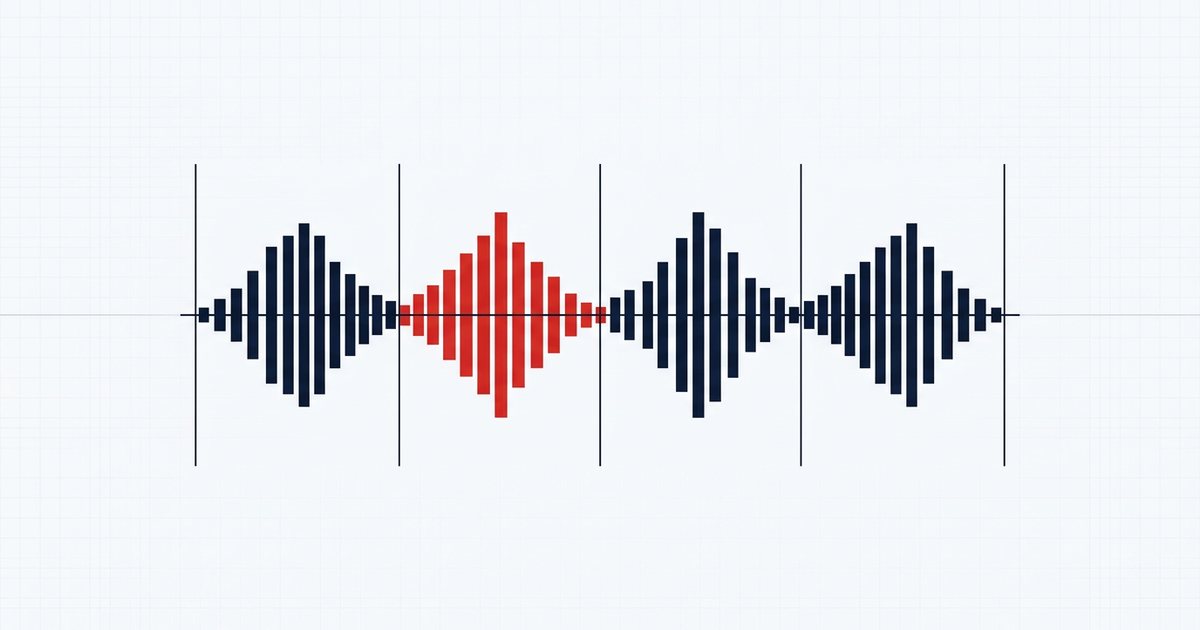
Audio is sold by the hour. Models learn from segments. Everything that decides whether the corpus works sits between those two words: how many channels, how loud, where a sentence ends, and whether the seconds you paid for actually contain speech.
A folder of clean recordings is not a corpus. It is raw material waiting for the decisions nobody wants to make.
One folder, three different problems
Speech recognition, audio event detection, and music each need different labels, different segment lengths, and different failure cases. Mixed into one collection, none of them gets what it needs.
We keep the task family as a field so a buyer can pull one without re-exporting the rest. A meeting recording and a field recording of rain can sit in the same delivery and never touch the same training run.
The fields that make segments reusable
- Sample rate and channel layout
- Loudness, measured consistently across the collection
- Segment start and end, cut at natural boundaries
- Language and speaker turn where speech is present
- Word-level timestamps for transcribed speech
- A condition label: close mic, far field, noisy, overlapping speech
Word-level timestamps are the field teams skip and then pay for twice. Without them, every downstream alignment task starts with a forced aligner and a week of cleanup.
Silence is not waste — unlabeled silence is
Long pauses, room tone, and dead air are valuable negative examples. They are also the fastest way to inflate an hourly count with material that teaches nothing.
The fix is not to cut them. It is to label them, so a buyer can include or exclude them deliberately.
Split by speaker, not by file
Ten files from one speaker split randomly will put the same voice on both sides, and the model will score well on a person it has already met. Split by speaker, and where the corpus allows it, by recording session and microphone.
The checklist we run
- Is every segment cut at a natural boundary rather than a fixed interval?
- Are loudness and channel layout consistent enough to compare files?
- Can silence be filtered without listening?
- Do transcripts carry word-level timestamps?
- Are speakers separated across training and held-out sets?
If a supplier cannot answer these, the hourly rate is not comparable to a corpus that can.
Where to start
Start from the task family — recognition, events, or music — and the recording condition closest to where the model will run. The audio collection describes what each family contains, and the corpus catalogue shows how the same recordings are read at different training stages.
Zovda cuts and labels these audio collections through Datuva, so the segment boundaries and listening conditions above travel with the files instead of a separate sheet.
Tell us the listening condition and the volume you need. We reply within one business day, and the field documentation is shared once the scope is confirmed.